How to Stop Focusing on Your Breathing During Meditation
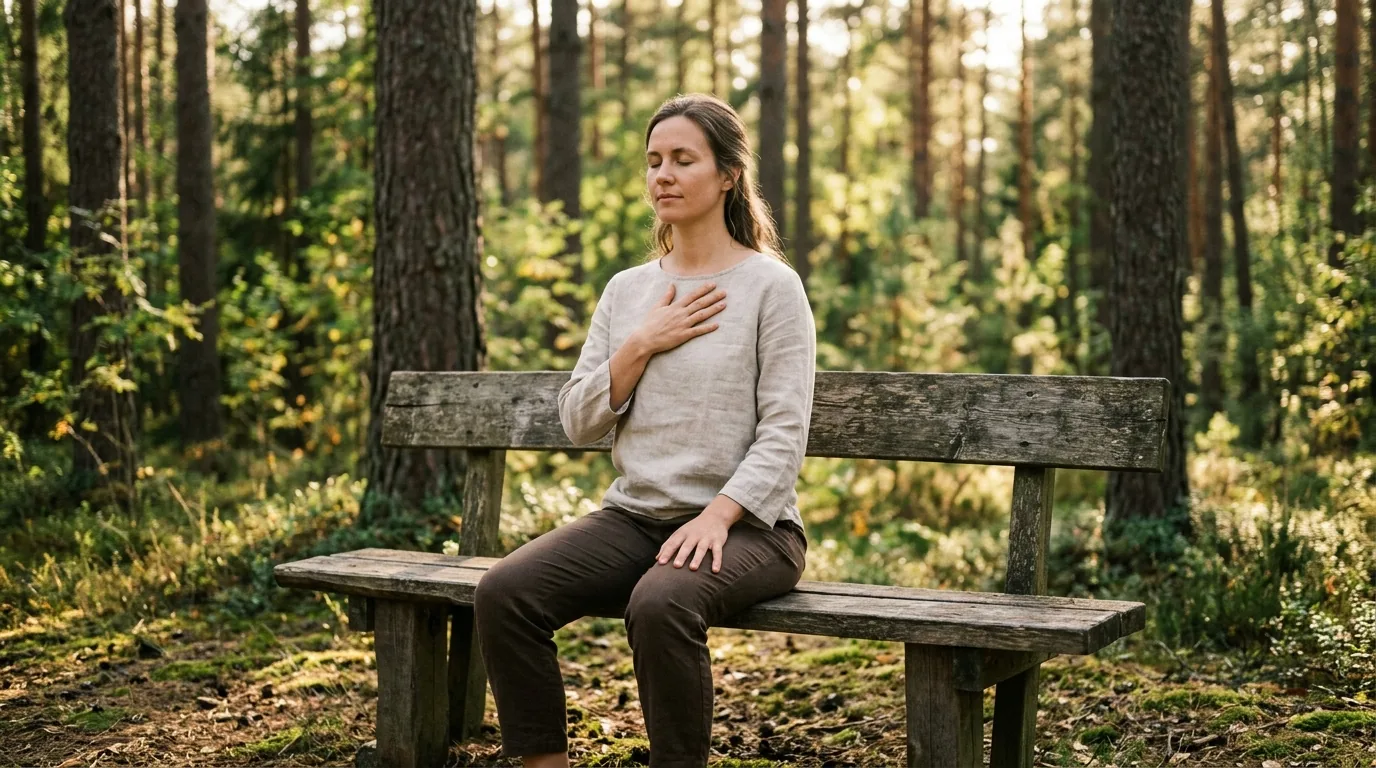
How to Stop Focusing on Your Breathing During Meditation
Knowing how to stop focusing on your breathing is one of the most common challenges in meditation — and one of the least talked about. You sit down to relax. You notice your breath. Then suddenly, you are watching every single inhale and exhale with intense scrutiny. The breath starts to feel forced. You wonder if you are breathing wrong. Anxiety builds. The meditation falls apart. This experience is far more common than most teachers admit. However, it is also fully resolvable. This article explains why it happens and gives you practical strategies to move past it.
Why You Can’t Stop Focusing on Your Breathing
Understanding the problem is the first step toward solving it. Breath hyperawareness during meditation is not a personal failing. It is a predictable psychological response.

The Paradox of Directed Attention
When you direct attention to breathing, you temporarily shift it from automatic to conscious control. Normally, breathing runs on autopilot. As soon as you notice it, however, the brain treats it as something requiring management. This is called the explicit monitoring hypothesis — studied extensively by sports psychologist Dr. Gabriele Wulf.
The result is a feedback loop. You notice the breath. You try to control it. It feels unnatural. You worry about it. You focus more. The cycle tightens.
Why Meditation Instructions Can Backfire
Most meditation instructions say: “Focus on your breath.” For many people, that instruction works well. However, for others — particularly those prone to anxiety or health anxiety — it creates the opposite of calm. The instruction to attend to breathing can trigger exactly the hyperawareness that makes breathing feel effortful and strange.
Therefore, learning how to stop focusing on your breathing is not about avoiding the breath entirely. It is about changing your relationship to it.
The Link Between Breath Hyperawareness and Anxiety
Breath focus gone wrong and anxiety are closely linked. Understanding this connection helps you approach the problem more effectively.
What Happens in the Nervous System
When you over-focus on breathing, you activate the same monitoring circuits that the brain uses to detect threat. As a result, the breath begins to feel like a problem to solve rather than a natural process to observe.
Becoming hyper-aware of your own breathing is a well-recognised feature of anxiety and panic, and clinicians see it often. Knowing that it is a known pattern rather than a sign of something wrong with your lungs is, for many people, half the relief.
The Good News
Fortunately, the same neurological mechanisms that create this loop also allow you to exit it. Because the problem begins with directed attention, redirecting that attention is the most reliable solution. Mindful breathing — done with the right attitude — teaches you to hold the breath lightly rather than grip it.
How to Stop Focusing on Your Breathing: Core Strategies
These strategies directly address breath hyperawareness. Use them in sequence or individually, depending on what helps most.
Strategy 1: Soften Your Focus Instead of Dropping It
Trying to stop focusing on breathing entirely rarely works. Instead, soften the focus. Imagine holding the breath lightly — the way you might notice background music without analysing every note.
How to practise:
- Begin your session with soft, peripheral breath awareness
- Think of breathing as the backdrop, not the subject
- If your focus sharpens, gently widen it — like stepping back from a painting to see the whole canvas
This approach respects the breath without demanding it be perfect.
Strategy 2: Shift to a Secondary Anchor
One of the most effective ways to stop overanalysing breathing is to give your mind a different anchor. This does not mean ignoring the breath. It means broadening your field of attention.
Effective secondary anchors include:
- Sounds — ambient noise, birdsong, distant traffic
- Physical sensations — the weight of your hands, warmth in your palms, contact of feet with the floor
- Body scan — moving awareness slowly from feet to head
- Visual focus — a soft gaze at a candle or a fixed point on the floor
As a result, the breath recedes naturally into background awareness without requiring effort to remove it.
Strategy 3: Use a Counting Practice
Counting breaths gives the analytical mind something specific to do. This reduces its tendency to over-inspect the breath itself.
How to practise:
- Inhale naturally
- On the exhale, count silently: “One”
- Continue to ten, then restart
- If you lose count, simply return to one — without self-judgement
This technique works because it occupies the monitoring function of the mind. Therefore, the breath becomes a vehicle for counting rather than an object of analysis.
Strategy 4: Label and Release
Borrowed from mindfulness-based cognitive therapy (MBCT), labelling your experience as it arises interrupts the hyperawareness loop.
When you notice over-focus on breathing, simply note: “Noticing breathing.” Then redirect. The label creates cognitive distance. It shifts you from being inside the experience to observing it briefly, then letting it go.
Examples of labels to use:
- “Noticing breathing”
- “Monitoring”
- “Controlling”
- “Worrying”
Each label is a small act of defusion — one of the core skills from Acceptance and Commitment Therapy (ACT).
Strategy 5: Practise Natural Mindful Breathing
Mindful breathing does not require controlling the breath. In fact, the most effective mindful breathing practice is one that observes the breath without directing it.
Instructions:
- Sit comfortably. Close your eyes.
- Allow your breath to continue exactly as it is.
- Notice where you feel it most — nostrils, chest, belly.
- Simply observe the sensation without adjusting, deepening, or slowing it.
- When you notice you have started to control it, acknowledge that. Then release the effort.
The phrase “allow the breath to breathe itself” captures this precisely. You are a witness, not a manager.
Building a Meditation Practice That Doesn’t Trigger Hyperawareness
Prevention is as important as correction. These approaches build a sustainable practice.
Start With Open Awareness Meditation
Open awareness meditation — also called choiceless awareness — does not use the breath as a primary anchor. Instead, you attend to whatever is most prominent in your experience: sound, sensation, thought, or emotion.
Open awareness and focused attention are genuinely different practices, and they train different things. If narrowing onto the breath has become uncomfortable, widening out is not giving up — it is switching to the other tool.
Try Walking Meditation
Walking meditation provides a kinetic anchor — the rhythm of steps and contact with the ground — that naturally occupies attention. As a result, breathing becomes incidental rather than central.
How to begin:
- Walk slowly and deliberately in a straight line or circle
- Place full attention on the sensation of each footfall
- Notice the lift, movement, and placement of each foot
- Let breathing continue in the background without direction
Many practitioners who struggle with seated breath-focused meditation find walking meditation immediately more accessible.
Use Body-Based Anchors Regularly
Regularly practising with body-based anchors — weight, warmth, contact — trains the nervous system to find stability outside the breath. Additionally, this builds tolerance for breath awareness when it does arise, because the mind knows it has other options.
Expert Perspective: Jon Kabat-Zinn on Effortless Awareness
Jon Kabat-Zinn, founder of Mindfulness-Based Stress Reduction (MBSR) at the University of Massachusetts Medical School, addresses this issue directly in his teaching. He consistently distinguishes between attention and control — noting that mindfulness is not about managing experience but about relating to it differently.
Awareness Without Effort
In Full Catastrophe Living, Kabat-Zinn describes the breath as “an anchor, not a leash.” The intention is not to fix attention rigidly on the breath. Instead, it is to use the breath as a returning point — a home base — while maintaining a quality of relaxed, open presence.
The Non-Striving Principle
Kabat-Zinn’s MBSR curriculum includes non-striving as one of its core attitudinal foundations. Applied to breath focus, this means: allow the breath to be what it is. Don’t try to breathe well. Don’t try to stop focusing. Instead, hold it all with curiosity and lightness.
This principle is precisely what people who struggle with how to stop focusing on their breathing need most. The solution is not more effort in a different direction. The solution is less efforting altogether.

Benefits of Resolving Breath Hyperawareness
Meditation Benefits
- Longer, calmer, more sustainable sessions
- Easier access to deeper states of relaxation
- Reduced frustration and abandonment of practice
- Greater trust in the natural rhythm of the body
Psychological Benefits
- Reduced anxiety around bodily sensations generally
- Improved capacity for non-reactive awareness
- Stronger sense of embodied safety
- Better ability to let go of mental control
Pros and Cons of Different Approaches
| Approach | Pros | Cons |
|---|---|---|
| Secondary anchor | Fast, flexible, effective | Requires experimentation to find right anchor |
| Breath counting | Occupies the analytical mind | Can become mechanical if overdone |
| Open awareness | No breath focus required | Less structured; harder for beginners |
| Walking meditation | Fully embodied, accessible | Requires physical space |
| Labelling practice | Creates immediate distance | Needs practice before feeling natural |
Learning how to stop focusing on your breathing takes practice — but it is absolutely achievable. The key insight is this: the problem is not the breath. The problem is the grip. Mindful breathing works when you hold the breath lightly, observe it without managing it, and trust that the body knows how to breathe without your supervision. Use secondary anchors, counting, and open awareness to give your mind a wider home. Additionally, embrace non-striving as your core meditation attitude. Finally, know that every practitioner who has struggled with this has found their way through it. You will too.
Six Anchors That Are Not the Breath
The practical answer to breath hyperawareness is not to try harder at ignoring it. It is to give attention a different job entirely. Any of these works as a full meditation object.
- Sound. Traffic, a fan, birds, the fridge. The only anchor that gets easier in a noisy room, and the best first choice because it is entirely outside your body.
- Hands. The temperature, weight and faint pulse in your palms. Steady, unlike the breath, because it does not change while you watch it.
- Feet on the floor. Pressure and contact. Particularly good if you feel unmoored or slightly unreal.
- Counting. Count anything except breaths — steps while walking, or slowly from one to ten and back. Gives the verbal part of your mind a job so it stops narrating your lungs.
- A visual point. A candle, a stone, a mark on the wall, eyes open and soft. Useful when closing your eyes turns the volume up.
- Movement. Walking with attention on the soles of your feet. Entirely legitimate meditation and often the right answer when stillness is the trigger.
Pick one and stay with it for at least three weeks. Switching every session keeps you circling the problem instead of building the alternative. The wider set of options is covered in focus meditation.
What Gets Hard, and What to Do About It
Checking your breathing has become a habit outside meditation
This is the version people find most distressing — noticing it in meetings, in bed, in the car. The counter-intuitive instruction is not to stop checking but to stop grading. Notice the breath, decline to assess whether it was a good one, and return to whatever you were doing. It is the grading that maintains the loop.
You feel you must take over the breathing manually
A well-recognised sensation and not a sign of anything wrong with your lungs. Move attention firmly to an external anchor — sound is best — and let breathing get on with itself unsupervised. It has managed unsupervised your entire life.
It gets worse at night
Because there is nothing else to attend to. Use a body-based anchor that is not the chest: the weight of your legs, the contact with the mattress, working slowly from the feet upward. A body scan is the standard tool here for exactly this reason.
You are avoiding meditation altogether now
Understandable, and worth resisting, because the avoidance teaches your system that the sensation was genuinely dangerous. Two minutes, eyes open, sound as the anchor, is enough to keep the door open without provoking anything.
It is bound up with panic
Breath hyperawareness is a common feature of panic and anxiety disorders, and if that is the context here, self-guided technique is not the main tool. Cognitive behavioural approaches to panic address this specifically and work well. Speak to a doctor or therapist, and use these anchors alongside that rather than instead of it.
What to Expect
Week one: the awareness is still constant, but you stop grading each breath. That alone reduces the distress noticeably even though nothing else has changed.
Weeks two and three: gaps appear — twenty minutes where you did not think about it. You will usually notice a gap only once it has ended, which is fine.
Weeks four to eight: the gaps get longer than the episodes. The fear that it will never go attenuates, which is often the more troubling half of the problem.
Beyond: it comes back occasionally, usually when you are tired or stressed, and it no longer alarms you. That is the realistic endpoint and it is a comfortable one.
Do not try to stop noticing — stop grading. Notice the breath, decline to assess whether it was a good one, and return to what you were doing. Then give attention a different job: sound, your hands, your feet on the floor, or counting something that is not breaths.
It is a common and well-recognised sensation, particularly for people prone to anxiety, and it is not a sign that anything is wrong with your lungs. Moving attention firmly to an external anchor such as sound lets breathing return to running itself, which it has done unsupervised your whole life.
Sound is the best first choice because it is entirely outside your body. The sensation in your hands, contact between your feet and the floor, counting steps while walking, or a visual point such as a candle all work as complete meditation objects. Stay with one for at least three weeks.
Because there is nothing else competing for attention. Use a body-based anchor away from the chest — the weight of your legs, contact with the mattress, working slowly upward from the feet. A body scan is the standard tool for exactly this situation.
Avoiding it entirely tends to teach your system that the sensation was genuinely dangerous. Two minutes with eyes open and sound as the anchor keeps the door open without provoking anything. If this is bound up with panic, work with a therapist alongside the practice rather than relying on technique alone.
Frequently Asked Questions
Why do I keep focusing on my breathing during meditation?
This happens because directing attention to the breath temporarily shifts it from automatic to conscious control. As a result, the brain starts monitoring breathing as if it needs management. Additionally, for people prone to anxiety, breath awareness can trigger hypervigilance. Therefore, the solution is not to stop noticing the breath entirely — but to hold it with less intensity, using softer focus or secondary anchors.
Is it normal to feel like breathing is uncomfortable during meditation?
Yes, this is very common. When you focus on breathing consciously, it can start to feel effortful or unnatural. However, there is nothing physically wrong. The discomfort comes from attention, not from the breath itself. Therefore, shifting focus to sounds, body sensations, or a counting practice usually resolves the discomfort quickly. In addition, mindful breathing with a non-controlling attitude reduces this experience significantly over time.
What is the best anchor to use instead of breathing?
The best secondary anchor depends on your sensory preferences. For example, sounds work well for people who are auditory. Physical sensations — such as the weight of hands or warmth in the palms — work well for people who are more body-aware. Additionally, gentle visual focus on a candle or floor point suits those who find internal awareness triggering. Experiment with each option over a week to find what creates the most natural sense of stillness.
Can mindful breathing help if I have anxiety?
Yes. Mindful breathing — approached with a non-controlling attitude — activates the parasympathetic nervous system and reduces the stress response. However, for people with anxiety, it is important to start gently. Instead of tight breath focus, use softer awareness or body-based anchors first. Additionally, the counting technique provides structure that many anxious meditators find reassuring. If breath focus consistently triggers panic, consult a mindfulness teacher or therapist experienced with anxiety.
How long does it take to stop overthinking breathing in meditation?
Most people notice improvement within one to two weeks of consistent daily practice using the strategies in this article. However, the timeline depends on anxiety levels and consistency. The counting method and secondary anchors tend to produce the fastest relief. Additionally, walking meditation can provide immediate benefit because it naturally occupies the mind with movement. Finally, practising the non-striving attitude from Kabat-Zinn’s MBSR framework often produces the most lasting change over time.
Keep reading

Mindful Living: How to Actually Do It on a Busy Day
Seven anchors that attach to a day you already have, and why "just be present" fails as an instruction.
Breathing Exercises for Anxiety: 6 Techniques That Work
Six techniques, when to use each one, and the common mistake that makes people feel worse instead of calmer.
How Long Should You Meditate?
Most people quit meditation over a number. Five minutes every day beats twenty minutes twice a week — here is how to pick a length you will actually keep…